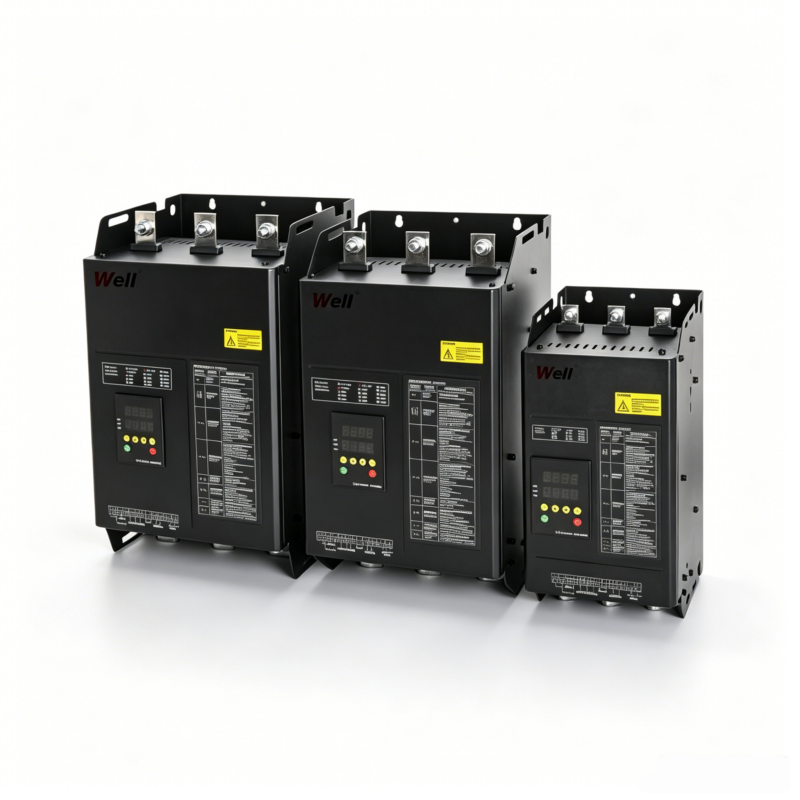
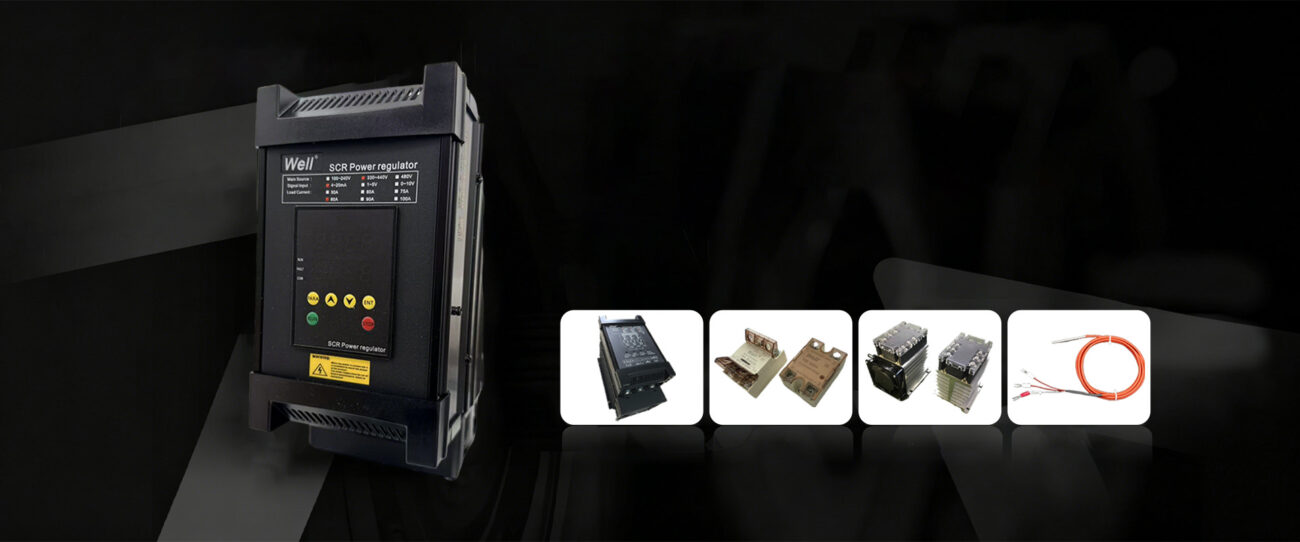
Whether it’s a factory drying oven, an electric furnace, or a workshop heating furnace, power regulators (commonly known as SCR power controllers) are essential for controlling power output and stabilizing temperatures. If one of these units fails, the equipment might shut down completely or suffer from temperature fluctuations; this not only disrupts production but also makes repairs costly and time-consuming.
Today, we’ve compiled a list of the 8 most common faults along with a foolproof troubleshooting guide. You don’t need to understand complex technical principles—simply match the symptoms to the causes to quickly pinpoint the issue on-site. It’s easy enough for even a beginner to handle.
- No output; load does not heat up (most common issue!)
Symptoms:
The power indicator lights up when powered on, but the equipment fails to generate heat regardless of settings; it remains cold to the touch.
Troubleshooting steps (ordered from simplest to most complex; start with visible elements):
Check the power supply: Are the plug, circuit breaker, or contactor loose? If using three-phase power, is one phase missing (phase loss)?
Check the signal: Is the temperature controller sending a "command"? Are the control circuits (e.g., connecting wires) broken or incorrectly wired?
Check the fuses: Open the controller unit and inspect the internal fuses or fast-acting fuses to see if they have blown (visible through the transparent casing).
Check core components: If the above checks out, the issue is likely a faulty thyristor module (essentially a failure of the high-performance power switch) or a trigger board malfunction.
Finally, check the load: Is the heating element broken? Are the connection points loose or oxidized?
- Heats at full power immediately upon energizing; uncontrolled (Dangerous!)
Symptoms:
The device begins heating at full power immediately without the start button being pressed or the temperature being set; the temperature skyrockets, and the unit cannot be turned off.
Emergency Action & Troubleshooting:
Cut the power immediately! This prevents equipment burnout or safety incidents.
Check the SCR (Thyristor): The SCR module is likely "stuck" in the on position (effectively a switch that won't turn off) and must be replaced.
Inspect control wiring: Is there a short circuit in the control signal lines (e.g., two wires fused together)?
Check the control unit: Is the temperature controller or signal source stuck at the maximum value (e.g., continuously displaying 100% power output)?
III. Fluctuating Output and Temperature Instability (A Real Headache!)
Symptoms:
Temperature fluctuates (rising and falling), power output jumps around, and the equipment fails to operate stably.
Troubleshooting Areas:
Load issues: Has one of the three-phase heating elements aged or failed? Check the resistance values; they should be roughly equal across all three phases for normal operation.
Power grid issues: Is there significant voltage fluctuation in the workshop? Is there interference from other high-power equipment?
Heat dissipation issues: Has the controller's cooling fan stopped working? Is the heat sink clogged with dust? Overheating can cause intermittent cycling (start-stop behavior).
Parameter issues: The temperature controller's PID parameters are not properly tuned (the controller itself isn't broken; simply adjusting the parameters should resolve the issue).
- Frequent fuse blowing and SCR (thyristor) explosions (costly!)
Symptoms:
The fuse blows immediately upon power-up after replacement; in severe cases, the SCR explodes and sparks fly.
Root causes:
Load short circuit: Breakdown of the heating element, leakage in the furnace body, or inter-phase short circuit at the wiring terminals (e.g., two live wires touching).
Undersized component: The regulator's rated current is lower than the actual load current, causing it to fail under the load.
Improper startup: Frequent rapid cycling (switching on/off) or excessive inrush current during cold starts (consider adding a soft starter).
Poor heat dissipation: Fan failure or dust accumulation on the heatsink, leading to SCR overheating and breakdown.
Power grid interference: Voltage surges or single-phasing (loss of a phase) in the power supply.
- Phase-loss output: One of the three phases fails to heat
Symptoms:
In a three-phase heating system, only two phases generate heat while one remains inactive, preventing the temperature from rising.
Troubleshooting steps:
Check the incoming power supply: Is there a missing phase (e.g., a circuit breaker for one phase is not closed)? Are the contactor contacts burnt or pitted (causing poor contact)?
Check the regulator: Is the thyristor module for that phase faulty? Are trigger pulses missing?
Check components: Has the fast-acting fuse for that phase blown? Are the terminal connections loose or charred?
- Overheating alarm, OL light turns on (reminder!)
Phenomenon:
The "OL" overheat indicator light on the regulator lights up and the output stops or the power decreases.
Troubleshooting:
Check the fan: Is the cooling fan not spinning? Is there any problem with the fan power supply?
Clean the dust: Is the radiator full of dust or the air duct blocked?
Check the load: Has the load power increased and exceeded the rated current of the regulator?
Environmental problems: The workshop temperature is too high and the heat dissipation conditions of the regulator are poor.
VII. Control signal present but output unresponsive (stuck at 0% or 100%)
Symptom:
When adjusting the temperature controller, the signal clearly changes, yet the power regulator either produces no output or jumps straight to full power, with no intermediate adjustment possible.
Troubleshooting:
Incorrect mode selection: Power regulation mode and voltage regulation mode are mixed up (e.g., set to voltage regulation when power regulation was required).
Parameter error: DIP switch settings or internal parameters are incorrect (e.g., confusing phase-angle control with zero-crossing control).
Signal mismatch: For instance, the regulator requires a 4–20mA signal, but a 0–10V signal is connected, rendering it inoperable.
Circuit damage: The sampling circuit on the mainboard is faulty and cannot detect the control signal.
VIII. Electrical leakage; the casing is live (dangerous!)
Symptoms:
Feeling an electric shock (ranging from a slight tingling sensation to a distinct shock) when touching the equipment casing.
Troubleshooting:
Load insulation: Aging heating elements or damaged insulation layers causing leakage from the furnace body to the ground.
Controller moisture/contamination: Excessive internal dust accumulation or a humid environment causing electrical leakage.
Poor grounding: The equipment is not grounded, or the ground connection is loose or unreliable (ensure a reliable ground connection—safety first!).
Standard Quick Troubleshooting Sequence (Follow these steps directly on-site!)
Check indicator lights: Observe the power, fault, overheat, and phase-loss lights; the illuminated light indicates the specific issue.
Test the load: After disconnecting the power, use a multimeter to measure the resistance of the heating elements; ensure the three phases are balanced and free of short circuits or open circuits.
Check the power supply: Measure the input voltage to verify that all three phases are present and the voltage levels are normal.
Verify signals: Check the temperature controller's control signal to ensure it responds to adjustments (e.g., a 4-20mA signal value should change when the temperature setting is altered).
Check cooling: Ensure the cooling fan is running and the heat sink is free of dust accumulation.
Assess components: If all the above checks pass, consider the possibility of a faulty thyristor module or mainboard.
Tips for Daily Maintenance (Minimize Malfunctions!)
Balance the three-phase load as much as possible to avoid overloading any single phase.
Clean regularly: Remove dust from heat sinks and cooling fans monthly to ensure proper heat dissipation.
Allow for headroom in selection: The regulator's rated current should be 1.2 to 1.5 times the actual load.
Essential protections: Install fast-acting fuses and earth leakage protection devices, and ensure reliable grounding.
Interference prevention: Use shielded cables for control signals and avoid bundling them with power lines.
If you can tell me whether your equipment is single-phase or three-phase, its current rating, and the type of load (e.g., drying oven, molten salt furnace), I can provide a customized troubleshooting checklist and a wiring fault-point diagram for more precise troubleshooting!